



Ceramic Plate
Your professional ceramic plate manufacturer
Professional team
In response to the growing trend towards energy efficiency and environmental protection, Senping has decided to begin production of infrared ceramic plates in 2020. Our ceramic plate product lines include infrared honeycomb ceramic plates, infrared ceramic boards, ceramic combustion plates,Infrared Ceramic panel, Energy saving Burner Chip, Cordierite ceramic plate, Ceramic soldering board, and more, Our company is committed to making a positive impact on the environment and believes that our products will help achieve this goal. With increased focus on green products and technologies, the use of infrared ceramic plates can significantly reduce energy consumption and emissions.
Furthermore, our company is dedicated to providing high-quality and reliable products to our customers. We understand that the demand for energy-efficient solutions is only going to increase in the future, and we are confident that our products will continue to meet the evolving needs of the market.
At Senping , we are excited to be at the forefront of this new wave of innovation and development. We believe that our commitment to producing environmentally-friendly products will not only benefit our customers but also contribute positively to our planet.
We are proud to announce our entry into the infrared ceramic plate market and look forward to a bright and sustainable future for our company and the world.
Production capacity
Senping's monthly production capacity of various ceramic plates is around 250 thousand pcs, with an annual output value of nearly USD 3 million . Our ceramic plates are exported to more than 10 countries and regions in Asia,Europe,Australia,and America , and are highly trusted and recognized by customers.

Factory direct pricing
Strict quality control
Fast lead times
Experienced team



Why Choose Us

1. Factory direct pricing
We produce and sell our products directly to our customers, which results in significant cost savings for them.
2. Strict quality control
We have strict quality control measures in place for every step of the production process to ensure that our products meet the highest standards. Defective products are not allowed to enter the packaging stage.
3. Fast lead times
We are able to produce most of our products within 10-15 days, which is significantly faster than many of our competitors.
4. Experienced engineering team
Our team of experienced engineers is able to support custom OEM orders to meet the specific needs of our customers.
5. Responsive and efficient service
We pride ourselves on being fast, efficient, and responsive to the needs of our customers. We work hard to resolve any issues as quickly as possible.
6. Comprehensive after-sales service
We follow up with our customers to ensure that they are satisfied with their purchases and to get feedback on how we can improve. We also offer returns, exchanges, and refunds to help address any concerns our customers may have.
7. Wide range of products
We offer a wide range of products to meet the needs of our customers across different industries.
8.Flexible payment and shipping options
We offer flexible payment and shipping options to make it as easy as possible for our customers to do business with us. Some regions support local currency payments; And various shipping modes and terms available such as sea, land, air shipping and EXW, FOB, CIF, and DDP term. We also have cost-effective forwarder partner to help customers save transportation costs.
Product types
There are complete types of ceramic plates, including: Infrared ceramic plate, Infrared ceramic board, Honeycomb Ceramic Plate, Ceramic Burner Plate, Infrared Honeycomb Ceramic Plate, Ceramic heater plate, Infrared cooking plate, Infrared grill plate, Ceramic oven plate, Infrared Honeycomb Ceramic Burner Plate, Ceramic Catalyst Substrate, Catalytic converter substrate, Infrared Ceramic Plate for BBQ, Infrared combustion plate,Infrared Ceramic panel, Burner Ceramic Chip, Energy saving Burner Chip, Ceramic cooking plate, Porous Ceramic Plate, Cordierite ceramic plate, Ceramic soldering board, Jewelry Soldering Fire Board.etc
Products are widely used in various industries including Infrared ceramic pieces have a wide range of applications across different industries. They are commonly used in the manufacturing of heating elements and heaters for a range of industrial and household applications. These include heaters for outdoor patios, saunas, food warming lamps, and heating elements for ovens, stoves, BBQ,grill,burner,cooker,and other appliances.
Infrared ceramic pieces are also used in the automotive industry to produce catalytic converters, which convert toxic emissions from engine exhaust into safer emissions. They are also used in motorcycle exhaust systems to help reduce noise and emissions.
Another important application of infrared ceramic pieces is in the field of healthcare. They are used to produce medical infrared lamps which are used to treat chronic pain, reduce inflammation, and improve blood circulation in patients.
Overall,infrared ceramic pieces are used in the fields of Home use, Industrial use, Energy efficiency,Filtering,Cleaning,Medical use,Automotive,Security,and Jewelry processing, etc, It continues to play an important role in improving the performance and efficiency of various products and processes.....
What is Infrared Ceramic Plate?
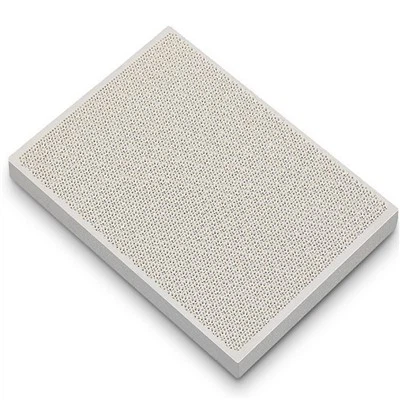
Infrared ceramic plates are special ceramic plates made of cordierite materials, which feature a unique pattern on their surface. They are widely used in gas stoves and heaters, as they are highly energy-efficient. These ceramic plates work on the principle of mixing gas and air, which blasts out of the small holes of the ceramic plate. This results in a fierce combustion within the small holes, which heats up the ceramic plate to extreme temperatures, without creating a visible flame.
The infrared radiation produced by the infrared ceramic board can heat objects more efficiently than other heating methods. Moreover, the harmful substance produced during combustion (such as CO and NO) is low. This type of ceramic plate is highly penetrative, which means its thermal energy can be easily absorbed by heated objects, resulting in significant energy savings.
Infrared ceramic chips are widely used in various applications, such as in gas barbecues, gas water heaters, portable food carts, gas heaters, and outdoor heaters. Thanks to the unique pattern of the ceramic plates, these stoves and heaters operate more efficiently, as they require less energy.
In conclusion, Infrared ceramic plates are effective, eco-friendly, and energy-saving. They offer many advantages over traditional heating methods and have become an essential component in many heating applications.


What are the different types of ceramic plates?
Infrared Ceramic Burner Plate


Infrared ceramic burner plate is a type of burner plate used in gas grills and barbecues. It is made from ceramic material that is designed to produce infrared heat. This type of burner plate is known for its efficiency, durability, and ability to distribute heat evenly across the surface.
Infrared ceramic burner plates work by producing an intense heat that quickly heats up the grill grate and the food being cooked. This allows for faster cooking times and also helps to lock in the flavor and juices of the food. Because of their design, infrared ceramic burner plates also use less gas than traditional burners, making them an eco-friendly option for outdoor cooking enthusiasts.
One of the main advantages of using infrared ceramic burner plates is that they help to reduce flare-ups caused by drippings from the food. This is because the intense heat of the burner plate vaporizes the juices and other liquids, which prevents them from igniting and causing flames. This means that the food cooks more evenly and without the risk of burning or charring.
Overall, infrared ceramic burner plates are a great addition to any outdoor cooking setup. They offer many benefits, including faster cooking times, better flavor, and reduced flare-ups. So, if you want to take your grilling game to the next level, consider investing in an infrared ceramic burner plate today!
Ceramic Oven Plate

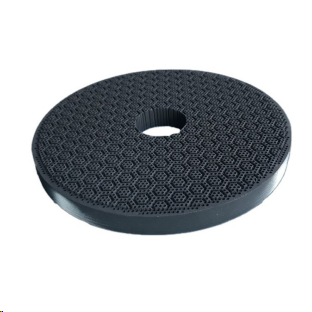
Ceramic oven plate is a type of plate that is specifically designed to be used in ovens. It is made from high-quality ceramic materials that are heat-resistant and can withstand high temperatures. These plates are typically used for cooking or baking food in the oven, such as pizzas, casseroles, and other similar dishes.
One of the primary benefits of using a ceramic oven plate is its ability to distribute heat evenly throughout the food being cooked. This ensures that everything is cooked to perfection and prevents hotspots from developing in certain areas of the dish. Additionally, because they are made of quality ceramic materials, these plates are often very durable and can withstand repeated uses without cracking or breaking.
Ceramic oven plates are also very easy to clean and maintain. They can be washed in a sink with soap and water or placed in a dishwasher for further convenience. This makes them a great option for busy households or for those who prefer to spend less time cleaning up after cooking.
Overall, ceramic oven plates are a great addition to any kitchen. They offer many benefits, including even heat distribution, durability, and easy maintenance, which make them an excellent investment for anyone who loves cooking or baking. So if you are looking for a reliable and high-quality oven plate that will help you enjoy tasty, perfectly-cooked meals every time, a ceramic oven plate is definitely worth considering.
Porous Ceramic Plate


The porous ceramic plate is a versatile material that has found its way into countless applications. It is a type of ceramic that is designed with small, interconnected pores that allow fluid and gas to pass through. This plate is made from a combination of ceramic materials that are heated to high temperatures to create a dense but porous structure.
One of the main benefits of the porous ceramic plate is that it is highly durable and can withstand high temperatures and harsh chemicals. Because of this, it is often used in industrial applications for filtration and separation processes. It is also used in the manufacturing of fuel cells and as a catalyst support in chemical reactions.
In addition to its industrial uses, the porous ceramic plate is increasingly being used in the healthcare industry. It has excellent biocompatibility and can be used in medical implants and drug delivery systems. It is also used in water filtration systems as it can effectively trap harmful toxins and contaminants.
The porous ceramic plate is a highly versatile material that has numerous applications across a range of industries. Its unique properties make it an excellent choice for filtration, separation, and catalytic purposes. As technology continues to advance, we can expect to see more and more applications for this innovative material..
Ceramic Catalyst Substrate


Ceramic catalyst substrate is a type of material used in catalytic converters. Catalytic converters are devices located in the exhaust system of vehicles that help reduce harmful emissions released into the environment. The substrate is the material where the catalytic reaction takes place.
Ceramic catalyst carriers are made from a ceramic material similar to that used in pottery and dishes. The substrate is coated with a thin layer of precious metals such as platinum, palladium, or rhodium. These metals help speed up the chemical reactions that take place in the catalytic converter and convert harmful pollutants into less harmful substances.
Catalytic converter substrate have several advantages over other materials used in catalytic converters. They have a high surface area which allows for more effective pollution reduction. They are also more durable and can withstand high temperatures and exposure to corrosive chemicals.
By reducing harmful emissions from vehicles, ceramic catalyst substrates play an important role in protecting our environment and improving air quality. With the increasing concern about climate change and pollution, the use of ceramic catalyst substrates is becoming more widespread in many industries.
In conclusion, ceramic catalyst substrates are a vital component of catalytic converters and are crucial in reducing pollution from vehicles. Their effectiveness, durability, and widespread use make them an important tool in improving air quality and protecting our planet.
Honeycomb Soldering Board for Jewelry


Honeycomb soldering board is a versatile tool that is used by jewelers for a variety of purposes. It is made up of a grid of small hexagonal cells that are made from ceramic materials. The honeycomb structure provides a stable surface that is perfect for any jewelry-making project.
The board is primarily used for soldering, which is the process of joining two or more pieces of metal together. The honeycomb structure of the board allows the solder and flux to flow through the cells, providing ample space for the components to be held in place while they are being heated. This ensures that the joints are strong and durable.
Honeycomb soldering boards are also useful for other jewelry-making techniques, such as drilling or shaping metal. The cells provide a surface for the metal to sit on, making it easier to hold and manipulate.
One advantage of using a ceramic soldering board is that it is heat resistant. This means that it can withstand high temperatures without being damaged. Jewelers can use a torch to heat up the metal and solder without worrying about damaging the board.
Another advantage is that the board is reusable. Once the solder has cooled, the jewelry can be removed from the board, and the board can be cleaned and used again for another project. This makes it a cost-effective tool that can be used over and over again.
In conclusion, ceramic honeycomb soldering board is a crucial tool for jewelers. It provides a stable surface for soldering and other jewelry-making techniques while also being heat resistant and reusable. It is an essential tool that every jeweler should have in their workspace.
FAQ

01.What is your production time?
For most of ceramic plates, Our production time need only 15days or so.
02.What is your payment term?
T/T, WU,PAYPAL,CASH,L/C, by discussion.
03.What shipping term can your company do?
EXW,FOB, CIF,CFR,DDP,FCA,DDU ,etc
04.Can you provide free sample?
Yes, Free sample is available to provide.
05.Can you make customized product?
Yes, We welcome all kinds of customized project.
06.What is the advantage of infrared honeycomb ceramic plates?
The advantages of infrared honeycomb ceramic plates are numerous, making them a popular choice in the heating industry. Firstly, these plates are highly energy efficient, reducing gas consumption by 30%-50% and saving users money. Secondly, their superior hardness and seismic resistance make them extremely durable and long-lasting. Additionally, the low noise and high combustion efficiency of infrared plates during ignition make them more efficient than ordinary ceramic plates. Perhaps most importantly, these plates significantly reduce harmful gas emissions, such as nitrogen oxides and carbon monoxide, by up to 90%. By choosing infrared honeycomb ceramic plates, users can enjoy cost savings, superior heating efficiency, and improved protection of the environment.
07.What is application of honeycomb ceramics?
Honeycomb ceramics are a new type of ceramic product with a structure similar to a honeycomb shape. They have been widely used in various industries such as household,industry, automotive, chemical, power, metallurgical, petroleum, electronics, and machinery. The development prospects are considerable.
Honeycomb ceramics have a wide range of applications, as described below:
1. Catalyst carrier
Honeycomb ceramics are used as catalyst carriers mainly in automotive exhaust purification, boiler flue gas denitrification (NOx), industrial exhaust deodorization, and removal of toxic and harmful gases. The honeycomb ceramic catalyst carrier used in automotive exhaust purification is mainly coated with γ-Al2O3 cordierite honeycomb ceramic carrier.
2. Refractory kiln furniture
The extruded honeycomb ceramic kiln furniture is 60%-75% lighter than traditional kiln furniture, with fast heat transfer and can achieve fast firing. When used as a firing support for ferrite or other electronic ceramics, it can improve the performance of the products.
3. Wall-flow particulate filter
The porous thin-walled honeycomb ceramics can filter and purify the carbon particles in the exhaust gas of diesel engines (about 500°C).
In conclusion, honeycomb ceramics have many advantages such as high specific surface area, high porosity, and low thermal expansion coefficient, which make them widely used in various industries. With the continuous development of technology, honeycomb ceramics will have even wider and more advanced applications in the future.
08.What is the useness of infrared ceramic plate?
The infrared ceramic plate is a special material that mainly works by generating and releasing infrared radiation. Infrared radiation is an electromagnetic radiation with a wavelength between visible light and microwaves, which cannot be observed by the naked eye. The infrared ceramic plate can convert electric energy into light energy, and produce infrared radiation by heating. Infrared radiation has many extensive applications, one of which is for heating and drying. The infrared ceramic plate can quickly and evenly heat objects to achieve the desired temperature. Therefore, the infrared ceramic plate is widely used in industrial production processes such as baking, melting, and drying. Its efficient heating characteristics improve work efficiency while reducing energy consumption and emissions. In addition, the infrared ceramic plate also has medical and healthcare applications. Infrared radiation has a thermal effect on the human body, which can promote blood circulation, accelerate metabolism. Moreover, the infrared ceramic plate is also used in security systems and infrared temperature measurement. In security systems, the infrared ceramic plate can detect the thermal radiation of the human body through infrared sensors, thereby achieving monitoring and alarm for intruders. In infrared temperature measurement, the infrared ceramic plate can accurately measure the temperature of an object by measuring the thermal energy radiated by the object, which is suitable for temperature monitoring in industries such as electricity, metallurgy, and chemical engineering. In general, the role of the infrared ceramic plate is to generate and release infrared radiation, which has a wide range of applications
09.How to install infrared ceramic board by sealing mud?
Installation of infrared ceramic tiles involves several steps including cleaning, drying, adhesion, drying and sintering.
1. Cleaning the tank is the first step. Steel wool, screwdriver, toothbrush, and test tube brush can be used for cleaning. Special attention should be given to avoid scratches or chipping of the porcelain.
2. After cleaning the tank, it is important to let it dry before adhesion. If there is a time constraint, the tank can be placed on a stove on low heat to dry.
3. Adhesion of the ceramic tile requires a adhesive mixture . Apply the adhesive mixture to the tank first and then place the ceramic tile, try to make it natural slope. The adhesive mixture should be applied for about 10 minutes only.
4. Once the adhesive mixture is applied, slowly and steadily put the ceramic tile into the tank. Avoid spot pressure and double-sided pressure, and use palm pressure or the same-side pressure instead.
5. After the ceramic tile is pressed with the tank, the installation will be completed.
6. The edges should be sealed with adhesive using fingertips to smooth it out.
7. Natural drying is recommended for 12-24 hours. Check for any cracks or gaps, and apply adhesive again if necessary.
8. Finally, the tank can be sintered. The suggested heating involves burning for 5-10 seconds, cooling for half a minute, burning again for 30 seconds, cooling for half a minute and then a final burn for 5-10 minutes.
Overall, the installation process requires attention to detail and a cautious approach. A positive and can-do attitude is necessary throughout the process.
10.Several methods for infrared ceramic plate installation technology?
1. Fiber paper (aluminum silicate fiber) installation: Different bonding agents used by manufacturers who specialize in producing fiber paper will result in different changes after high temperature test firing.
- The use of organic glue as a bonding agent will result in the glue charcoaling and turning black after test firing, causing the fiber paper to lose its bonding agent and crumble. This is generally used for side packaging. The thickness of this type of fiber paper is generally 1mm or 2mm.
- The use of a composite bonding agent of inorganic glue and organic glue results in a stronger bond and is less likely to crumble after test firing. However, it is relatively expensive and is generally used for bottom packaging.
2. Edge-sealing mud installation:
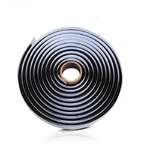
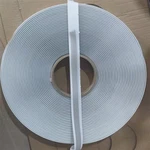
- High-temperature resistant sealing adhesive: HBC-1029, HBC-1096, with a range of high temperature resistance from -80℃ to 1000℃. This adhesive has good bonding properties, is moisture-proof, anti-vibration, and has high aging resistance. It is most suitable for bonding and sealing between metal and ceramic. This method is expensive and can only package 6-10 furnace heads per tube.
- Silica sol + talcum powder + refractory mud + a small amount of organic adhesive (preferably water-soluble).
- Water glass + talcum powder. This type of edge-sealing mud is convenient to use, but it can affect the service life of the ceramic plate and mold on the surface of the ceramic plate when it gets damp. This is because sodium salts are extracted when it gets damp. If a small amount of asbestos fiber is added, the impact on the ceramic plate can be decreased.
Overall, infrared ceramic plate installation technology is an important part of the production process that ensures the durability and reliability of products. We should always seek to improve and innovate in this field to meet the needs of customers and the market.
11.How to select an infrared ceramic plate?
When selecting an infrared ceramic plate, there are a few important things to keep in mind. Firstly, it is important to consider the application for which the plate will be used. Different infrared ceramic plates can have varying heat outputs and temperatures, so it is important to find one that is suitable for the intended purpose.
Another important factor to consider is the size of the plate. Depending on the size of the space or object that needs to be heated, the size of the infrared ceramic plate may need to be adjusted. It is important to measure the space or object beforehand to determine the appropriate size.
In terms of quality, it is recommended to choose an infrared ceramic plate made from high-quality materials that will last longer and provide better performance. It is also helpful to read reviews or consult with professionals to ensure that the chosen infrared ceramic plate has a good reputation.
Lastly, price is an important consideration when selecting an infrared ceramic plate. However, it should not be the only determining factor. It is important to find the best value for the money and to remember that investing in a quality infrared ceramic plate can provide long-term savings in energy costs.
Overall, selecting an infrared ceramic plate can seem daunting, but by considering factors such as application, size, quality, and price, one can make an informed decision and choose a plate that will best suit their needs.
12.What is features of good quality infrared ceramic plate?
A: Firstly, the surface average power density determines the heating performance of the plate. A high power density means greater efficiency and better heating performance.
Secondly, the maximum temperature the plate can withstand is a measure of its durability and longevity. The higher the temperature limit, the better the plate's performance.
Thirdly, the weight of the plate plays a significant role in its heating efficiency. Generally, a lighter ceramic plate of the same model signifies better heat performance.
Fourthly, the plate's ability to rapidly heat up and cool down is also crucial in determining its performance.
Fifthly, the plate's lifespan is an important factor to consider. The longer the lifespan, the better the plate's overall performance.
Sixthly, the energy-saving effect of the ceramic plate is significant in reducing energy consumption and increasing the plate's performance.
Lastly, the uniformity and consistency of the plate's parameters are also determining factors of its performance. For example, if the heating performance, weight, and other parameters are consistent across the same model, the plate is considered of good quality.
It's important to note that the ceramic plate's glaze brightness has no impact on its performance, as the key factor is its radiation rate. Therefore, a shiny surface does not guarantee better heating performance and can even negatively impact the plate's durability.
Overall, a good quality infrared ceramic plate possesses various features that prioritize efficiency and durability.
13.What is advantage of ceramic catalyst carriers?
Ceramic catalyst carriers possess numerous advantages that make them an ideal choice in various industries. These carriers are extremely resistant to high temperatures and harsh chemicals, ensuring that they remain undamaged while the reaction takes place. This allows for more efficient and effective catalytic reactions due to the stability and durability of the ceramic material.
Additionally, ceramic catalyst carriers provide excellent performance for extended periods of time, ensuring consistent and reliable performance. They are also highly customizable, allowing for specific reactions to be optimized to achieve the desired result.
Furthermore, ceramic catalyst carriers are environmentally friendly, as they can be reused and recycled. Compared to other materials such as metals or plastics, ceramic carriers have a much lower environmental impact.
Overall, ceramic catalyst carriers are a highly beneficial choice for a range of catalytic reactions, providing a robust and dependable solution that is also environmentally friendly.
14.Why are honeycomb ceramic plates used in jewelry industry?
Honeycomb ceramic plates are a versatile material that can be applied in the jewelry manufacturing industry. They offer various benefits that make them a top choice for many jewelry makers.
One of the primary benefits of using honeycomb ceramic plates in jewelry manufacturing is their durability. Unlike other materials that can easily break or chip, ceramic plates can withstand a significant amount of pressure, making them ideal for carving intricate details or forming complex designs.
Another advantage of using ceramic plates is their resistance to heat and chemicals. Many jewelry manufacturing processes require exposure to high temperatures and harsh chemicals, which can be damaging to other materials, but not to ceramic plates. This enables jewelry makers to experiment with different styles and techniques without worrying about damaging their tools.
Additionally, honeycomb ceramic plates are lightweight and easy to handle, which makes them an ideal choice for jewelry makers who are looking for a precise and comfortable grip when working on their jewelry pieces.
In conclusion, honeycomb ceramic plates are an excellent choice for jewelry manufacturing. Their durability, resistance to heat and chemicals, and ease of use make them a great material for producing high-quality, intricate, and stunning jewelry pieces.