Vinyl Mastic 2200: Why Do Cable Crews Refuse to Switch Tapes?
Ask a splicer what's in the side pocket of his bag and you'll usually get a grunt, then a roll of mastic tape. Not the shiny stuff. The dull grey one that smells faintly of rubber and grabs your glove if you handle it too fast.
That roll is sold as vinyl mastic 2200, and it has quietly held cable joints together for decades. No torch, no mixing, no curing window. Peel the paper, press it down, move on.
What's actually in the roll
Three layers doing three jobs. A butyl mastic core, a PVC film on top, release paper underneath. Only one face carries adhesive, and that is exactly what a cable wrap needs.
Butyl does the sealing. Water doesn't bother it much, it stays soft when the weather turns, it creeps into the small gaps around a lug or a strand bundle, and it refuses to go brittle after a summer in a hot pedestal. The PVC film handles the physical side. It is a dielectric, it shrugs off abrasion and the mild chemicals that hang around ducts and handholes, and it gives the tape enough backbone that it won't tear when you pull it tight.
Two insulators, one tape. That is the whole trick, and it is the reason this product ended up in electrical, telecom and communications work instead of on a shelf next to duct tape.
Where it earns its keep
LV and MV splices, coax and feeder connectors, aerial closures, ground rod connections, cabinet entries, mast and conduit wraps. Anything that has to stay dry and stay insulated somewhere nobody wants to crawl back to in February.
Peel, press, forget it
The release paper comes off in one piece. Wrap it, overlap by half the width, press with your thumb, and the mastic fills the gaps on its own. At 2am in a manhole with a flashlight in your teeth, that counts for a lot.
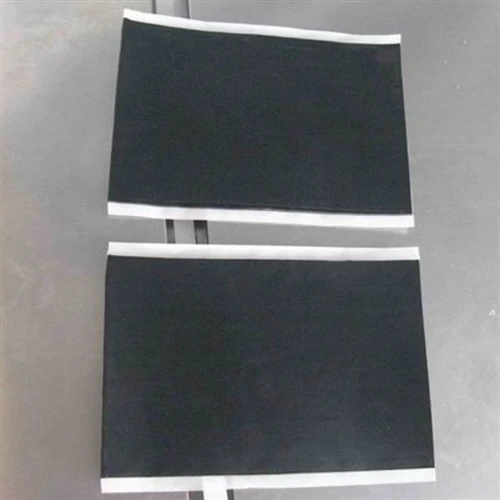
Sizes are where buyers get particular. Most don't want a catalogue number, they want a piece that fits their closure, their jig, their splice body. Width, length, thickness, sheet or roll, die-cut or slit. Send a drawing and ask for a sample. A workable butyl mastic tape supplier will cut it without much fuss, and that is the difference between a tape you fight and a tape you just use.
Three habits that ruin a good wrap
Stretching the tape until it goes thin, which just moves the thickness away from the place the moisture was heading for. Wrapping over a damp or dusty surface and expecting the mastic to forgive you. Leaving the outer layer naked in the sun for years with no UV-rated over-wrap. Small mistakes. Expensive when a joint fails at three in the morning.
FAQ
Does it need a primer? No. Clean, dry and grease-free is enough. If the surface is oily or dusty, wipe it first.
How long does it last? Inside a dry closure, ten to twenty years is normal. Outdoors, treat it as the first layer and cover it.
Can it go on live circuits? No. Dead cable only, and follow your own local rules.
What is the smallest order? It depends on the size. Custom die-cut pieces usually start at a few thousand, standard rolls lower. Ask.
Bottom line
If your splices keep coming back, the tape is far cheaper than the callback. Vinyl mastic 2200 isn't clever. It is just honest: butyl for the seal, PVC for the skin, release paper for the man on the ladder.