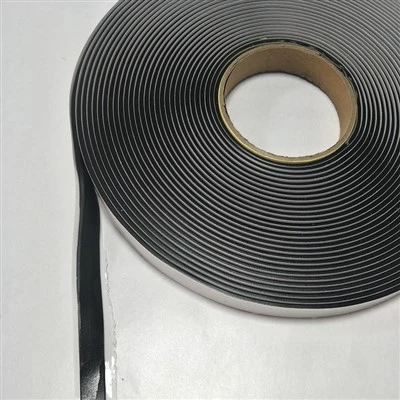
Can Butyl Glass Sealant Tape be used to seal glass cracks?Last month, I noticed a thin crack running across my kitchen window. Nothing dramatic-just a hairline fracture from the last cold snap. My first instinct was to grab a tube of butyl glass sealant from the workshop and call it fixed. But then I paused. Is this actually the right move, or am I just slapping a patch on something that needs real attention?
Here's what I've learned after dealing with this stuff for years-not as a chemist, but as someone who sells it daily and hears back from customers who actually use it.

The good part
That crack I mentioned? I sealed it. It's been three months, and it hasn't leaked. The sealant stretched when the glass expanded under the afternoon sun, and it contracted back when temperatures dropped overnight. That flexibility is real, not just marketing talk. Water stays out too-I tested it with a garden hose, and nothing seeped through.
For small cracks on non-structural glass-think sheds, greenhouses, or garage windows-it does the job. Application takes maybe five minutes. Clean the surface, run a bead along the crack, smooth it flat, and walk away. No special tools beyond a caulking gun.
What nobody tells you
This one matters: for big cracks, don't bother. I had a customer who tried sealing a 12-inch split on a storefront door. Two weeks later, the glass sagged and the sealant peeled right off. That glass had lost its structural strength. No sealant in the world brings that back.
What I've seen from the factory side
I buy these sealants from a factory in China-they're one of the larger manufacturers for butyl tapes and sealants in the region. What surprised me is how much the quality varies between batches. The cheap stuff from random suppliers dries out and cracks within months. The better-grade product from established manufacturers as Senping butyl glass sealan tape lasts years. If you're ordering a mass order for a project, ask for a sample roll first. Test it. Cut it. Stretch it. Leave it in the sun for a week. See what actually holds up.

We offer OEM and ODM options for clients who want their own branding on the packaging. Some buyers slap their labels on and resell locally. Others want specific widths or thicknesses for their roofing or HVAC work. That side of the business is straightforward-you tell us the spec, we run it through the production line.
The one thing I wish more people asked about
Cost per meter, not per roll. I've seen buyers get excited about a cheap price on a bulk order, only to realize later that the roll had half the material they expected.
Would I do it again?
For that kitchen window? Yes, because it's tucked away and nobody looks at it. For anything visible or load-bearing? No. And if you're sealing a crack in tempered glass, I'd skip it entirely-that stuff moves too much and the sealant will fail faster than you expect.
If you're a contractor or a hobbyist working through a stack of repairs, test a small area first. See how the butyl glass sealant tape behaves in your climate. And if you're buying from a China-based manufacturer like the one I work with, request a production sample before placing a mass order. It saves headaches later.